Huntingfield Landcare's First Working Bee
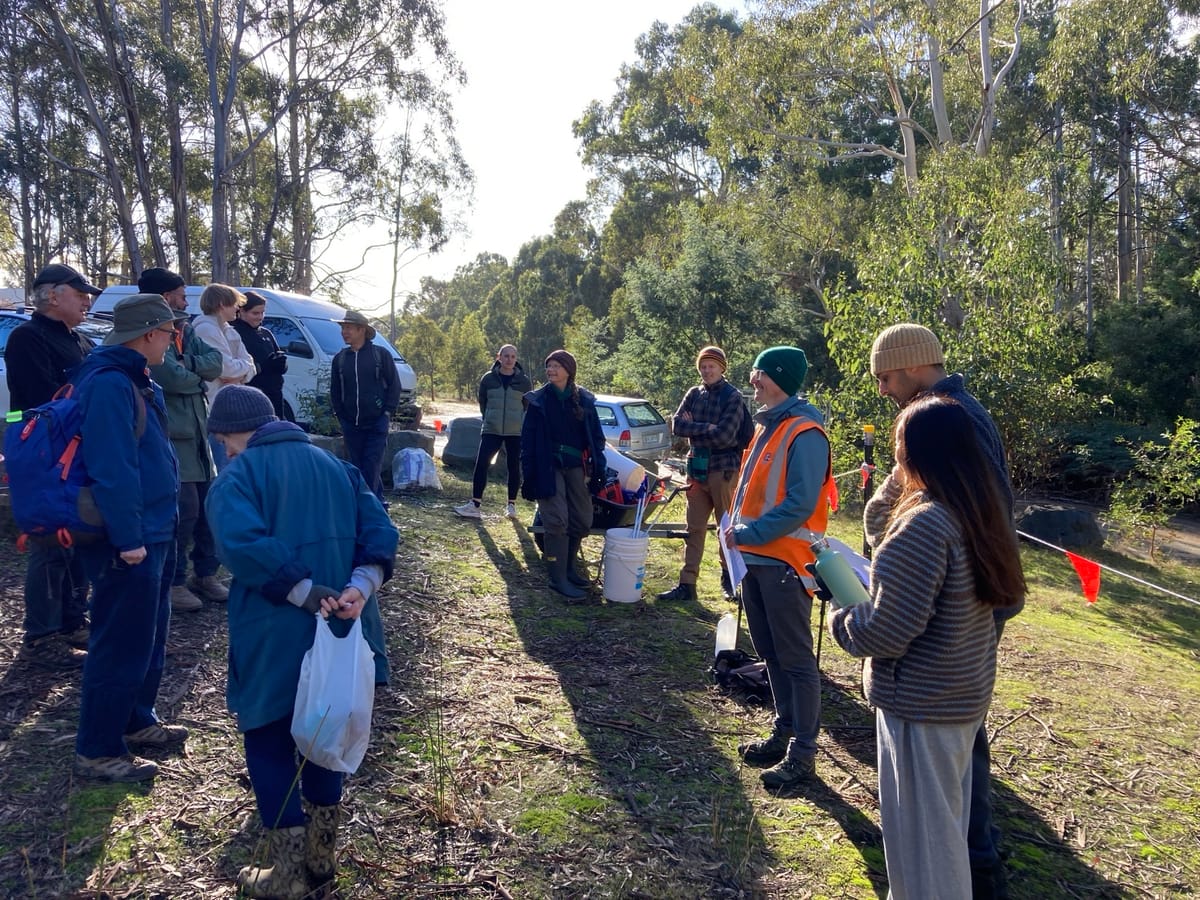
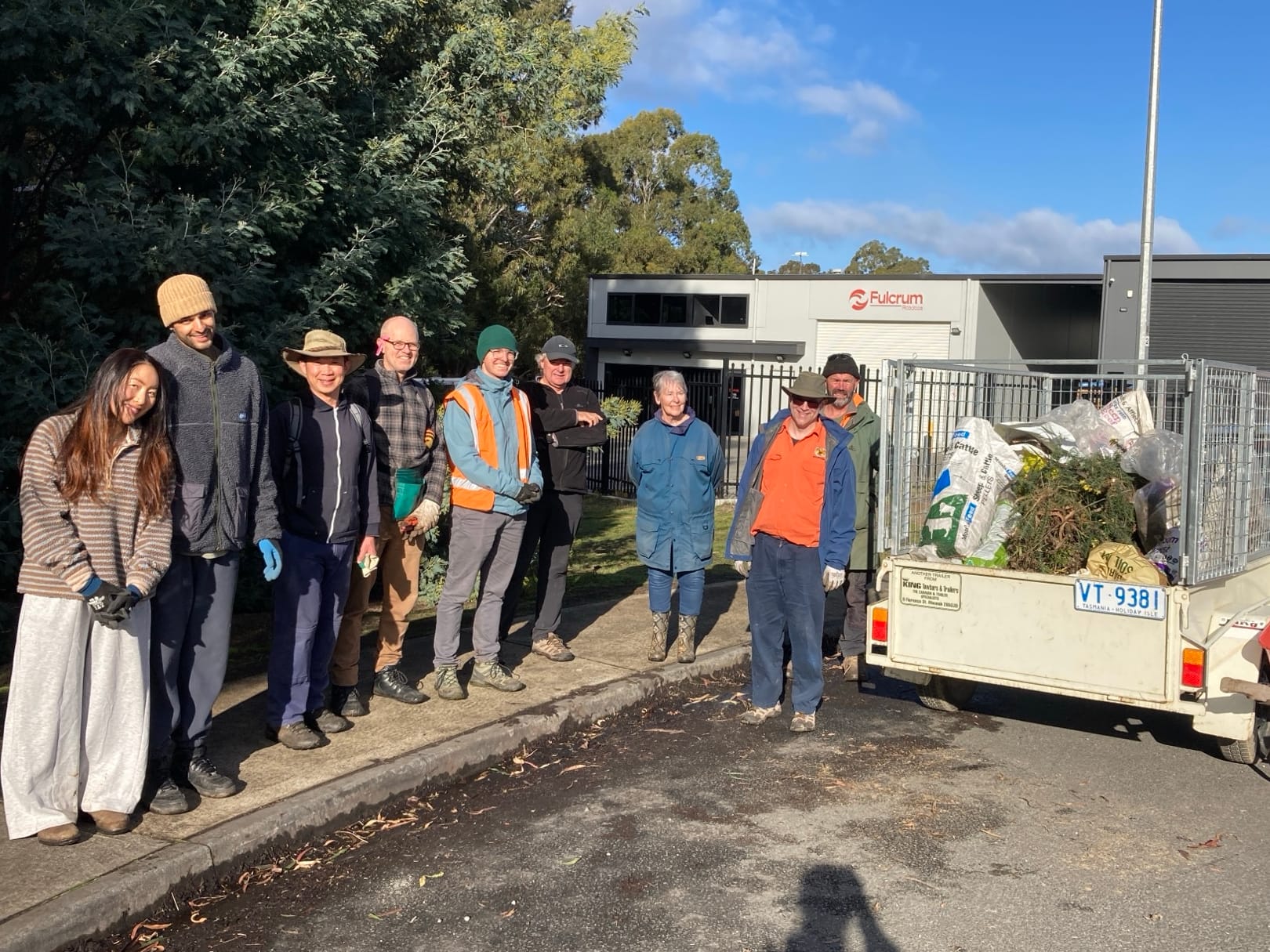
This year I have been working on the creation of the Huntingfield Landcare group and on Saturday 4th July 17 people from Huntingfield, surrounds and as far away as Launceston came together for the first working bee!
A glimpse of the mess before we started.
The original goal was a simple rubbish clean up in the Coffee Creek reserve at the end of Ascot Drive, however the large amount of interest I had received meant we needed some more work to do! The rubbish took us less than an hour to collect so we moved on to addressing several weeds in the area that are painful to touch, compete with native vegetation and reduce habitat for native animals.
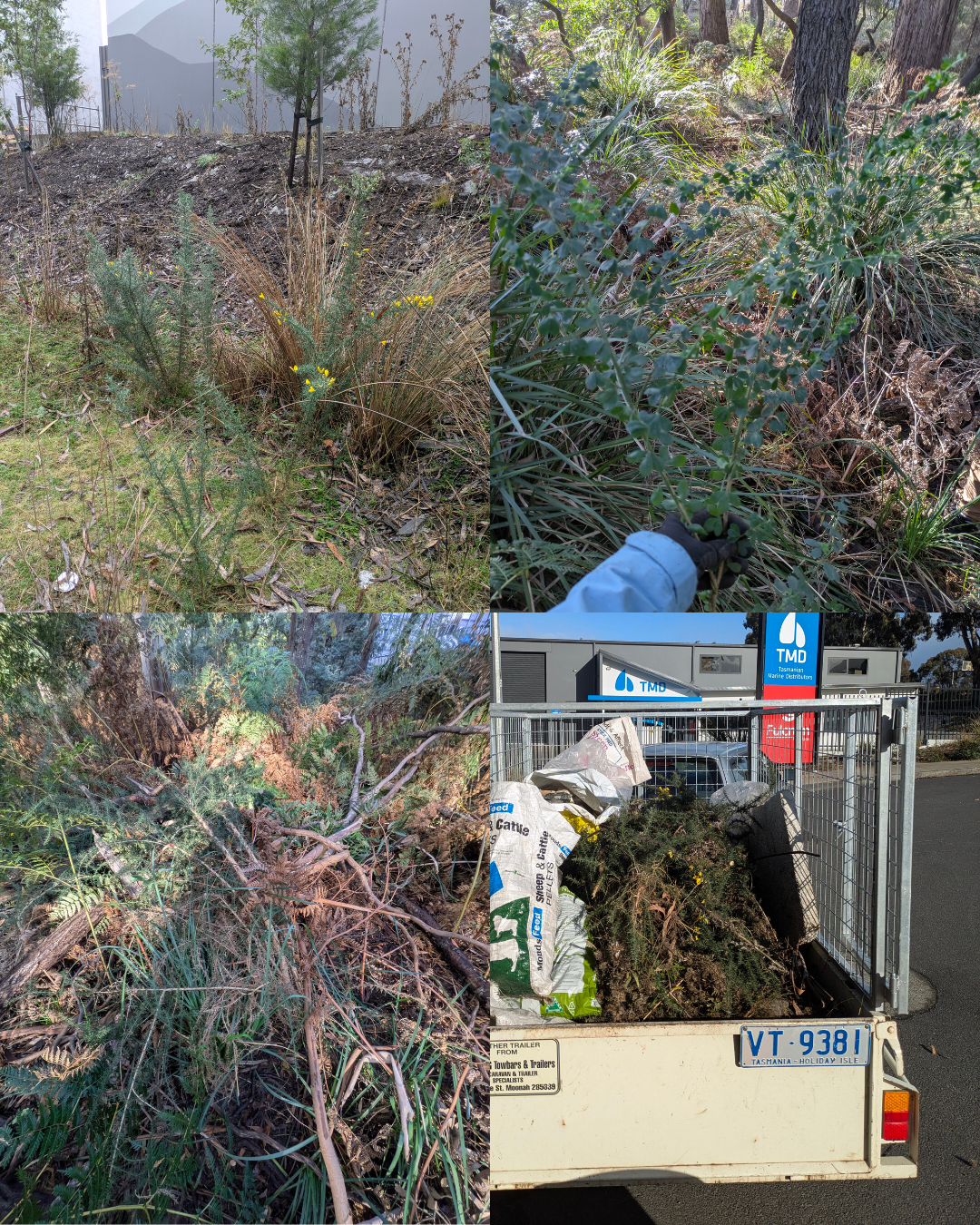
Removed weeds included:
- Gorse: A dense, woody, and highly spiky shrub that in some places grew so large it needed to be sawn at its base and painted with glyphosate.
- Montpelier broom: an invasive woody legume shrub with bright yellow pea-flowers and trifoliate leaves that forms dense thickets.
- Various thistle: aggressive colonising plants that establish quickly in disturbed or overgrazed ground, spread prolifically through wind-borne seed.
- Blackberry: a vigorous, thicket-forming woody weed introduced in the mid-1800s as a fruit and hedging plant before escaping to become a Weed of National Significance that smothers native vegetation and pasture and harbours pests.
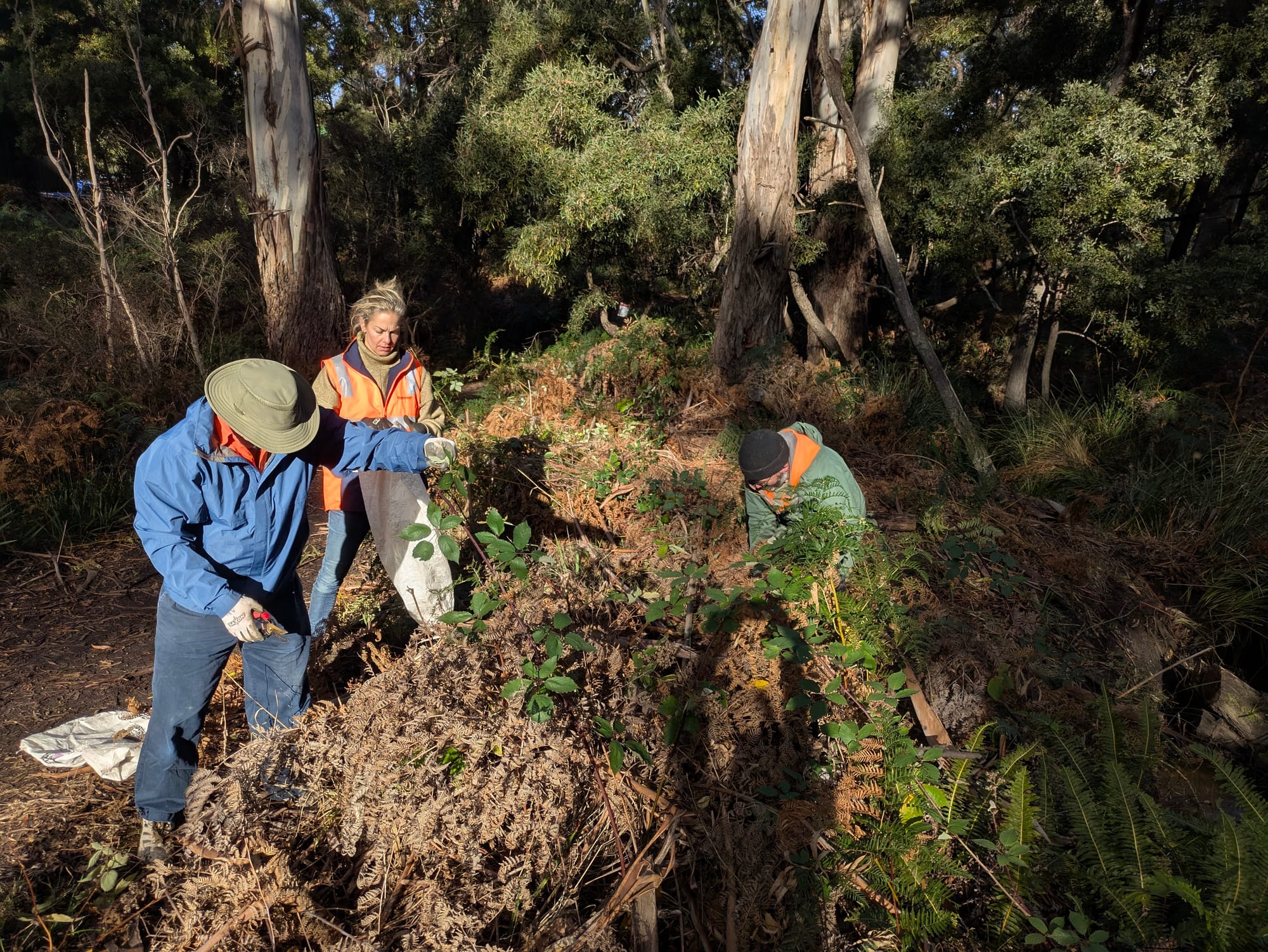
For those that were there to see the before and after, the change was dramatic, bringing this pocket of the reserve back to the litter-free native bushland that we love Tasmania for.